
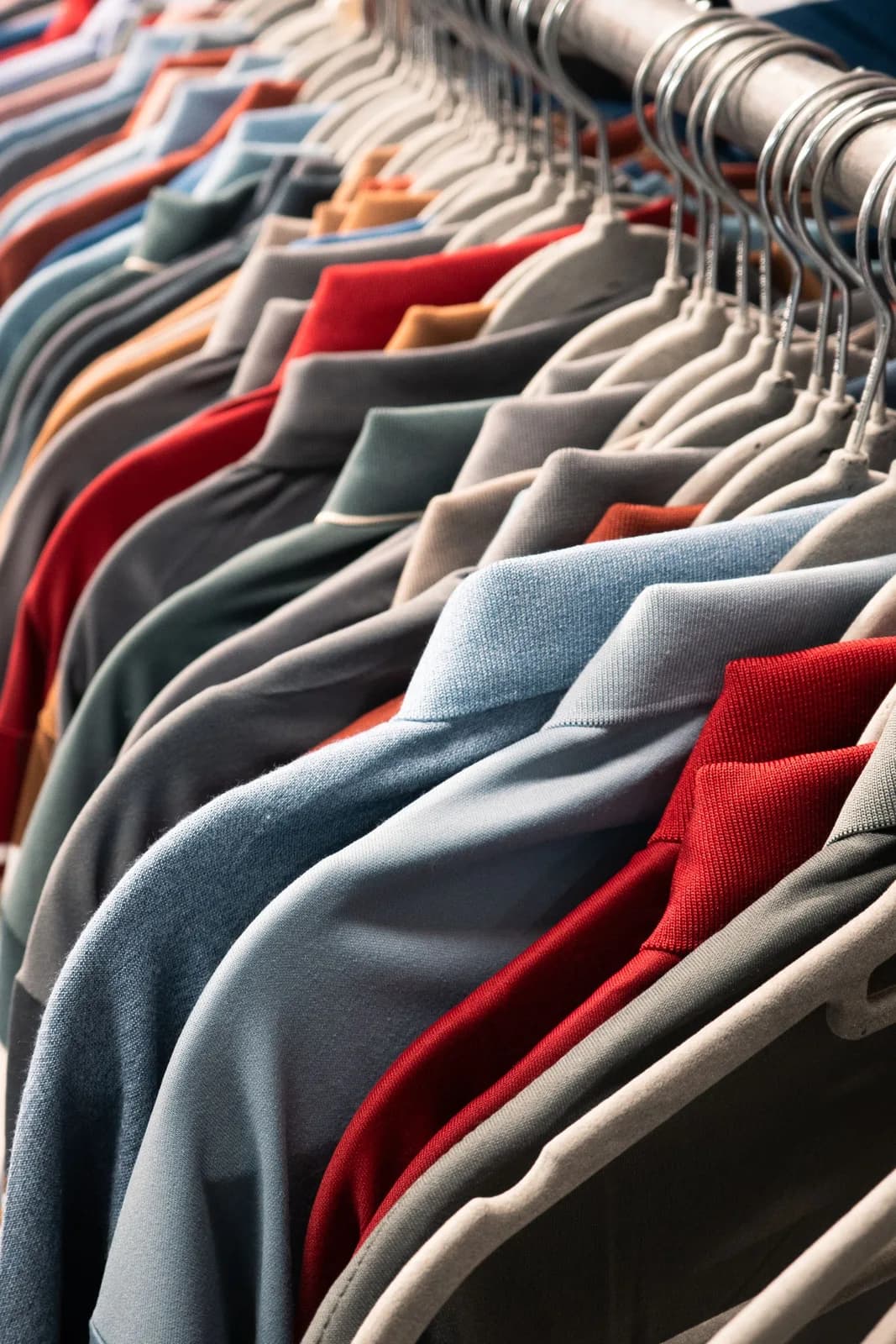
When choosing a work T-shirt or polo shirt, start with a model that supports a comfortable working day and suits your business image. A garment's name alone does not establish breathability, durability or protection. Compare each option's data sheet, measurements and care instructions.
Collar and cut change the appearance
Polo shirts usually have a collar and button opening; T-shirts tend to have a simpler neckline. This can help define the team's image, but does not determine comfort. Compare the actual cut, length and sleeves. If staff perform different tasks, you do not need the same model for every role.
A business can use polo shirts for customer-facing roles and T-shirts elsewhere, retaining the same colour and logo. This is a visual arrangement, not a statement of protection or suitability for a specific task.
Check the model's measurements
Do not prepare an order by automatically copying each person's usual size. Check whether the chart uses body or garment measurements and follow that method. Note whether it will be worn over another layer. If uncertain, ask how to check fit before confirming all quantities.
| What to compare | Useful question |
|---|---|
| Length and width | Do they match the model's size chart? |
| Sleeves and shoulders | Do they allow normal movement without pulling? |
| Layering | How does it fit under the uniform's sweatshirt or jacket? |
| Collar and fastening | Do they suit the task and the role's image? |
Read composition and care separately
Composition identifies fibres; care instructions explain how to treat the garment. Do not infer washing temperature solely from cotton or polyester percentage. GINETEX Spain explains care symbols, including washing, drying and ironing. Check the model's label and customisation care instructions before organising maintenance.
If your business uses an external laundry, include its conditions in your enquiry. It is better to check compatibility when choosing than to discover later that the washing routine does not suit the uniform.
Reserve space for your logo
Before choosing a technique, decide what should be readable and from where: chest identification and a large back design have different needs. Mark the position and approximate size on each garment. Seams, pockets and collars can limit the available area.
Use the screen printing and embroidery comparison to prepare the design review. Avoid approving a finish from an isolated logo image alone.
Plan a selection you can replenish
Keep a list for each person with model, size, colour and quantity. Include replacement garments needed for the working schedule and enquire about future availability; do not assume a model will remain available indefinitely.
Explore SIC Refinish workwear for garment selection. If you have the model and design, move on to a personalised clothing proposal.
For restaurants, bars or cafés, explore hospitality uniforms for kitchen and front of house to organise your proposal by role.