
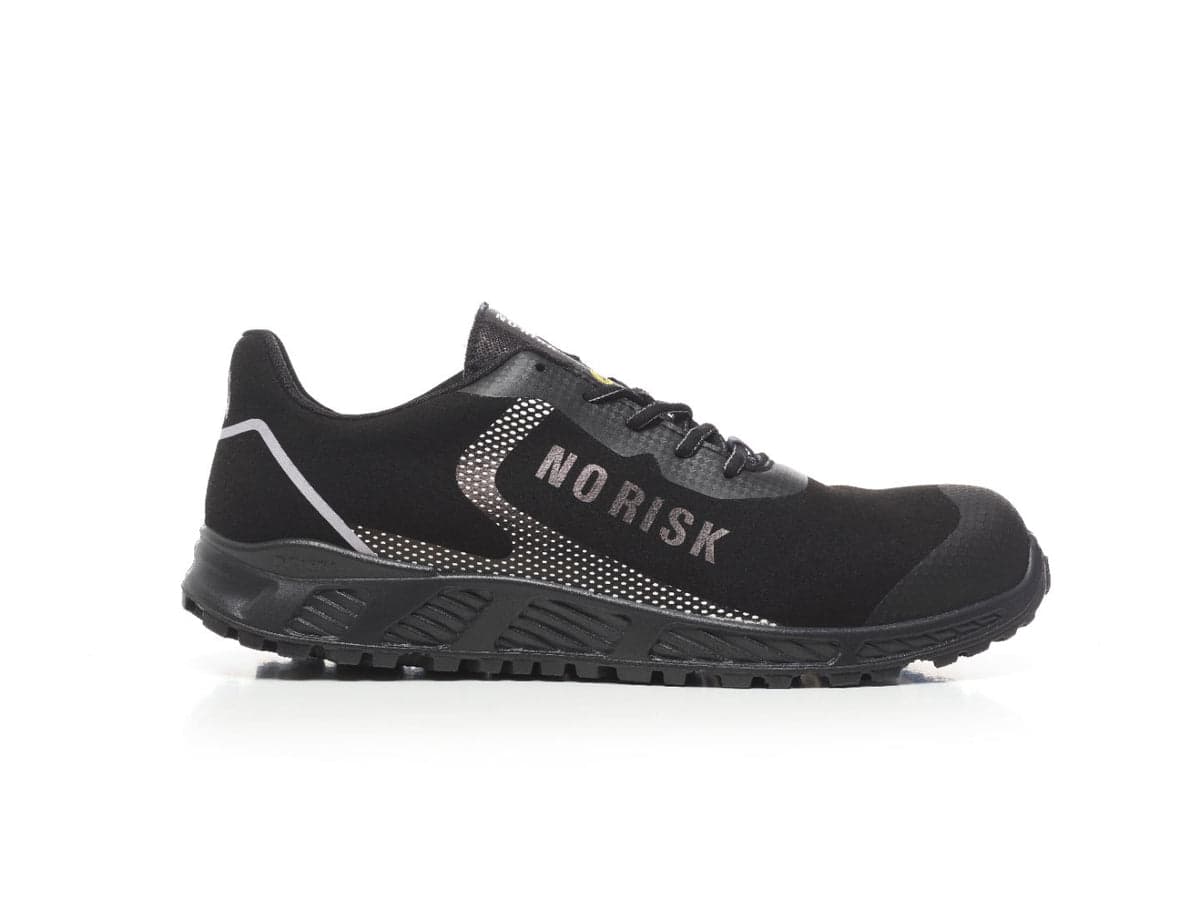
To choose comfortable safety trainers, first check the protection required for the role and then compare the fit of suitable models. A sporty design may look appealing, but does not prove that it is lightweight, fits your foot or works in every environment. The best comparison combines manufacturer information with trying on the complete footwear.
Start with the protection you need
Provide your job requirements when enquiring about a model: floor type, moisture, mechanical risks and specific conditions. INSST distinguishes occupational footwear from safety footwear and lists properties to assess according to risk. A trainer’s appearance is no substitute for this choice.
A workshop, warehouse and customer-facing role may have different conditions even within the same business. It is therefore more useful to request “footwear for this role with these requirements” than one model for all staff based on looks alone.
Five points to check the fit
- Length: check both feet against the model’s size guide.
- Width: make sure there is no pressure at the sides; increasing the size does not always solve an unsuitable last shape.
- Toe area: check that contact with the toe cap is not uncomfortable when moving.
- Heel and fastening: assess how securely the shoe fits when walking and how it can be adjusted.
- Real combination: try the footwear with the socks you will wear and check compatibility if you need a different insole.
Compare in a safe environment without exposing footwear to hazards to “test” its protection. Record what happens with each model: loose heel, pressure on the instep or insufficient space. This is more useful when requesting another size or reference than simply saying “it is not comfortable”.
Lightweight does not mean suitable
When comparing weight, ask for the figure and measurement conditions: the size used and whether it refers to one shoe or a pair. A figure from another size, or a comparison between a pair and a single shoe, can mislead. We do not publish a ranking of the lightest models here because we have not measured the three pairs under comparable conditions.
Weight alone does not describe flexibility, internal shape or sole behaviour either. Avoid choosing a trainer solely for its toe cap material or a marketing term. Read more in the guide to composite toe safety footwear.
Sporty models you can enquire about
At SIC Refinish, NO RISK Black Panther, X-TREME Low Black and SNKR Street Green are available on quotation. Product sheets identify the reference and start the enquiry; they do not guarantee the same wearing experience for everyone.
The documentation for Black Panther mentions a composite toe cap, water-repellent microfibre and breathable lining. Check the version to be supplied against the role’s requirements. To compare the selection without confusing versions, see our NO RISK footwear guide.
How to order several pairs for a business
Use a separate line for each model and size. For example, 3 pairs in size 40, 5 in 41 and 2 in 42 total ten pairs; do not enter twenty individual shoes as the quantity. Add the role’s requirements, required date and any fit questions. You do not need to send employees’ names to request a quote: you can organise allocation using internal references.
The SIC Refinish form lets you combine sizes and quantities. We will confirm availability, price and lead time for the selection. If buying for several roles, specify which requirements apply to each group before finalising the model.