
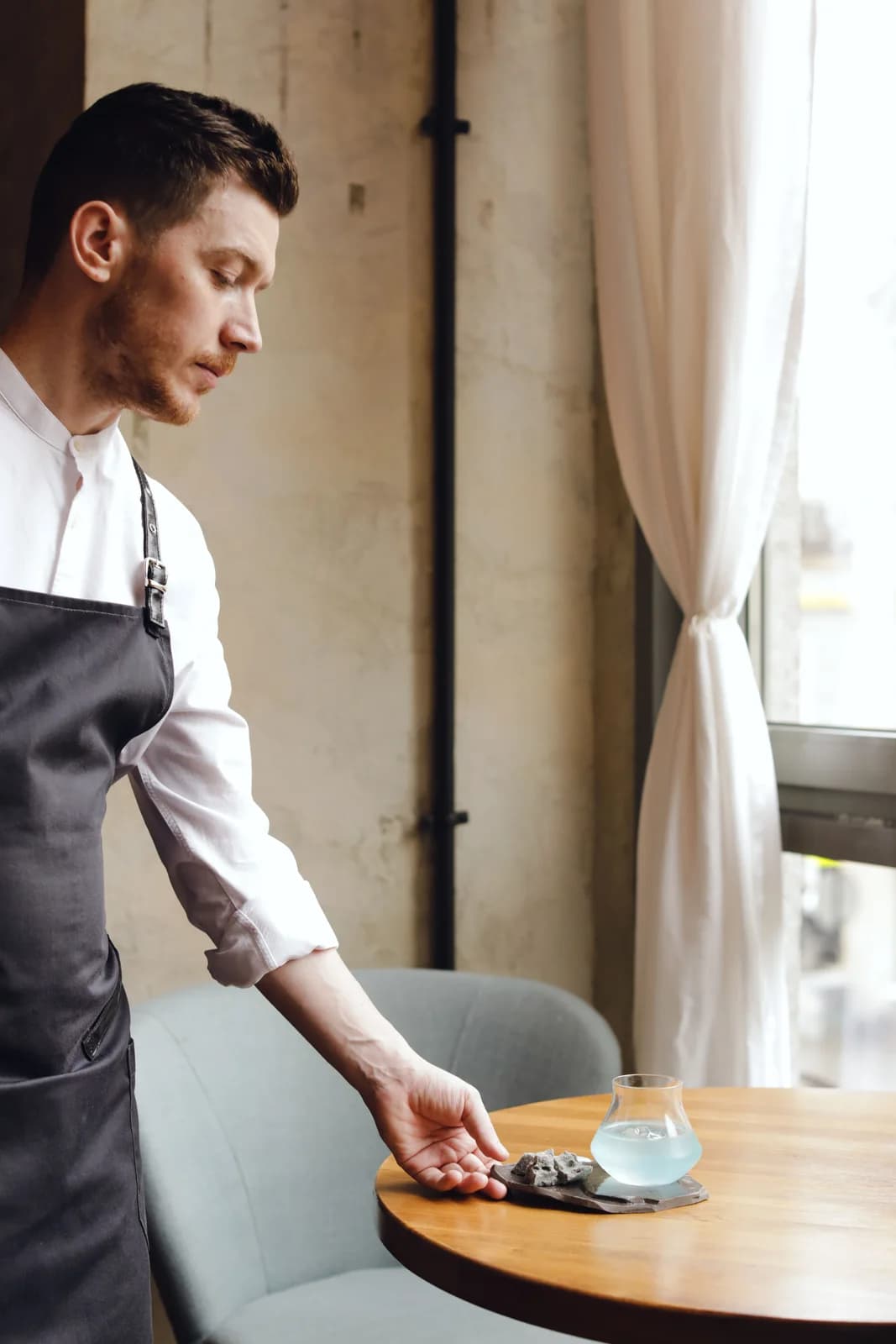
Personalised waiter uniforms should maintain your business identity while allowing staff to carry a tray, reach a shelf or use an ordering terminal. To choose between a polo shirt, shirt and apron, start with the service and then decide on the design. A café with a terrace and a restaurant serving dinner may share a brand but need different garments.
Polo shirt or shirt: choose for the service you provide
| Option | When to consider it | What to check |
|---|---|---|
| Personalised polo shirt | Bar, café or an informal look with a collar. | Fit when raising the arms, fabric, collar and branding space. |
| Waiter shirt | Dining room or events seeking a more formal look. | Ease when extending the arms, buttons, cuffs and length during movement. |
| Shirt or polo with an apron | Service needing pockets or a shared colour element. | That the bib does not hide the logo and straps do not restrict movement. |
These are selection criteria, not rules for how every establishment should dress. A polo is not always cooler, nor a shirt always stiffer: review the composition, cut and sample of the specific reference. Our work T-shirt and polo guide develops the garment comparison.
Which apron style works in the dining room or bar?
A short waist apron leaves the upper uniform visible. A long apron offers different coverage and visual presence, but you should test walking and pocket access. A bib apron adds front space for branding and changes how much of the shirt can be seen.
Test pockets with the items actually used: notebook, pen or terminal. Check that they can be removed without awkward movement and do not fall out when bending. “Has pockets” means little if the device does not fit. Our personalised apron guide helps review format, fit and design.
Coordinate the brand without dressing every role identically
Choose one shared element: a colour, an apron or the logo position. Then adapt the rest. For example, consider shirts for dining room staff and polos for the bar, with the same apron. This is an organisational example, not a fixed SIC uniform package.
Review the logo on the complete outfit. If it sits beneath the bib, consider another position or branding the apron itself. With textured fabrics and small lettering, request a readable proof at actual size. Compare embroidery and screen printing for the specific artwork; neither technique suits every garment automatically.
Example order for eight people
Suppose there are five people in the dining room and three at the bar. For its own rotation, the business chooses three upper garments and two aprons per person. The initial calculation, without additional spares, would be:
| Allocation | Garment | Quantity |
|---|---|---|
| Dining room: 5 people | 3 shirts per person | 15 shirts |
| Bar: 3 people | 3 polos per person | 9 polos |
| Whole team: 8 people | 2 aprons per person | 16 aprons |
The total is 40 pieces across three product lines. Do not use that total as though it meant 40 identical shirts when comparing prices. Break each line down by size, colour and reference; adjust the allocation to your establishment’s changing and laundry needs. Define spares for new starters or replacements separately.
Try the uniform during normal movements
- Check fit with the garment fastened and the apron in place.
- Reach to a normal working height and extend your arms to identify tightness.
- Test pockets with service equipment, without carrying hot or dangerous items.
- Check length when walking and sitting, if the task requires it.
- Record the size, model and any adjustments needed before approving the batch.
Carry out the fitting in safe conditions. Do not make a complete service the first sizing trial, or select everyone’s garments based on one person’s fit.
Include laundering and replacement in the comparison
Check the label and branding care instructions. GINETEX symbols distinguish washing, drying, ironing and other treatments: black or white colouring does not determine the process a garment accepts. Keep the precise reference and colour; a description such as “black polo” is insufficient to reorder the same model.
Compare quotes with the same logo positions, quantities and terms. Ask about artwork preparation, taxes, transport, availability by size and receipt date. Confirm how small replacement orders and individual names would be handled before ordering the first batch.
Request a proposal for your restaurant or café
Through the SIC Refinish hospitality uniform service, you can explain roles, your desired look and quantities to prepare a personalised quote. Attach the logo and required date; models and terms are set out in the proposal. To coordinate the kitchen team too, see personalised chef uniforms in bulk.