
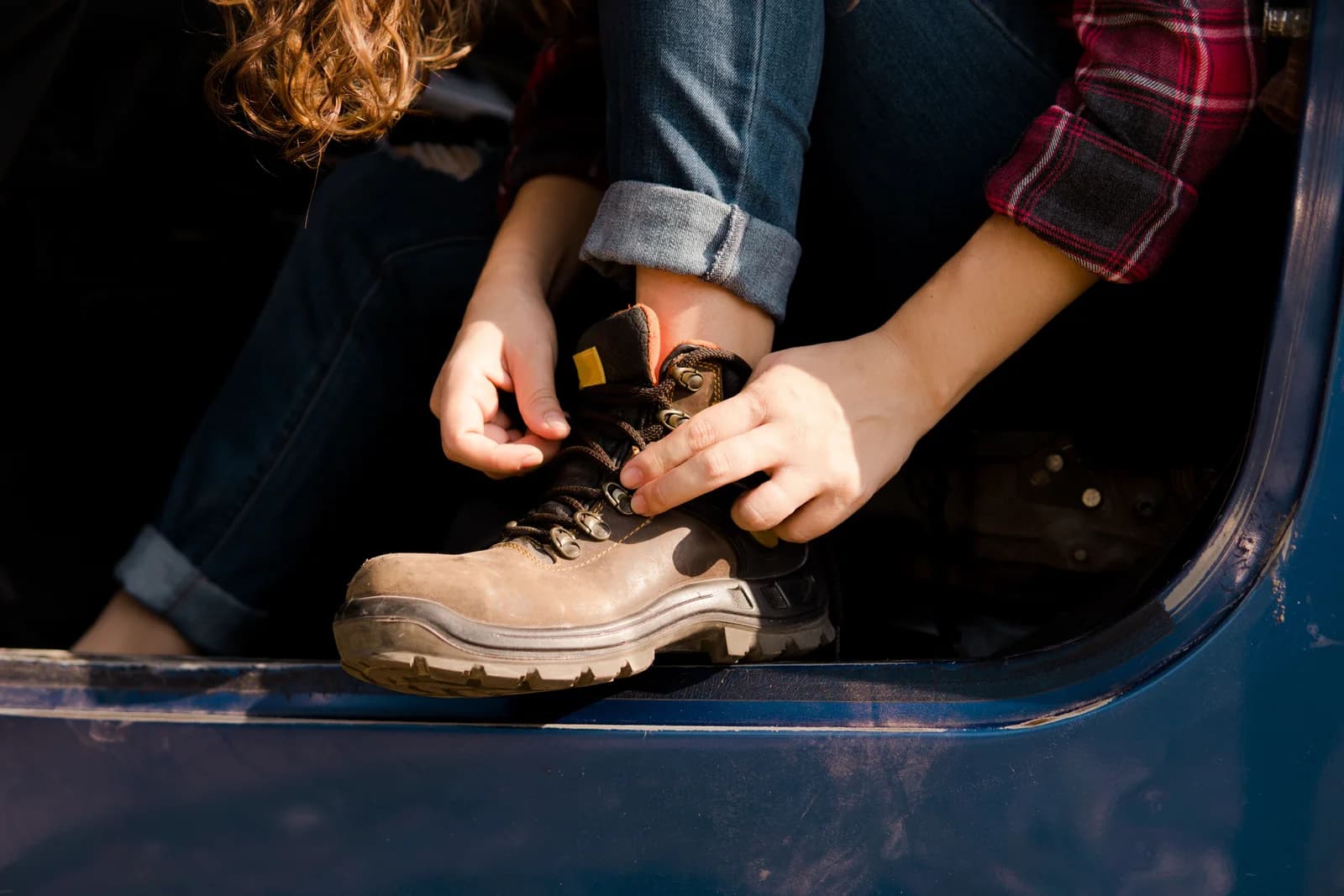
The question “how often should I replace my safety footwear?” has no universal calendar answer. A pair can suffer sudden damage before it looks old. Another may receive less intensive use but still need assessment because of its condition or the manufacturer’s instructions.
Service life depends on the model and its use
INSST explains that the manufacturer’s information is the reference for assessing PPE service life, considering use, storage, cleaning and maintenance. Distinguish between the manufacturing date, the issue date and actual time in use. Record all three where available; none replaces a condition check.
What to check before the working day
The uvex footwear care guide recommends checking for visible damage before use. Organise your check by area:
- Outsole: worn tread, cracks, separation or embedded objects.
- Upper: cuts, tears, open seams or distortion.
- Fastenings: laces, eyelets and other systems that no longer hold the footwear securely.
- Interior: changed fit, loose parts or damage that makes wearing the footwear difficult.
If you find damage or significant changes, set the pair aside and notify the person responsible for workplace safety so that replacement can be assessed. A photograph or the outside appearance alone cannot establish that the footwear still provides its protection.
What to do after an impact or incident
After a significant impact, crushing event or unexpected contact with substances, do not assume that cleaning the shoe is enough. Stop using it while the manufacturer’s instructions and the workplace procedure are checked. Identify the complete reference: discussing only a composite or steel toe cap does not describe all the equipment’s features.
Keep a simple inspection record
For a team, record the reference, issue date, observed problem and decision. A useful example is: “Sole separating at the heel; pair withdrawn; replacement requested”. Recording the action makes follow-up easier and prevents an alert being left between shifts. Periodic inspections should follow the instructions that apply to the model and the work.
Plan replacement using the correct reference
Collect the size, model, documentation and job requirements before ordering a replacement. If fit was the problem, read our guide to comfortable safety trainers; ordering the same size again does not always resolve discomfort. Browse the NO RISK models in our catalogue and request a quote in workwear and work footwear. The final choice must match the protection required for the task.