
SIC REFINISH · BARCELONA
Plastic primer for automotive bodywork
To choose a plastic primer, first identify the part's material and the refinishing system. An adhesion promoter is not a universal solution for every plastic. At SIC Refinish you can enquire about Carsystem Plastic Primer and prepare a workshop order with the appropriate reference and pack size.
Ask about primer for my workshop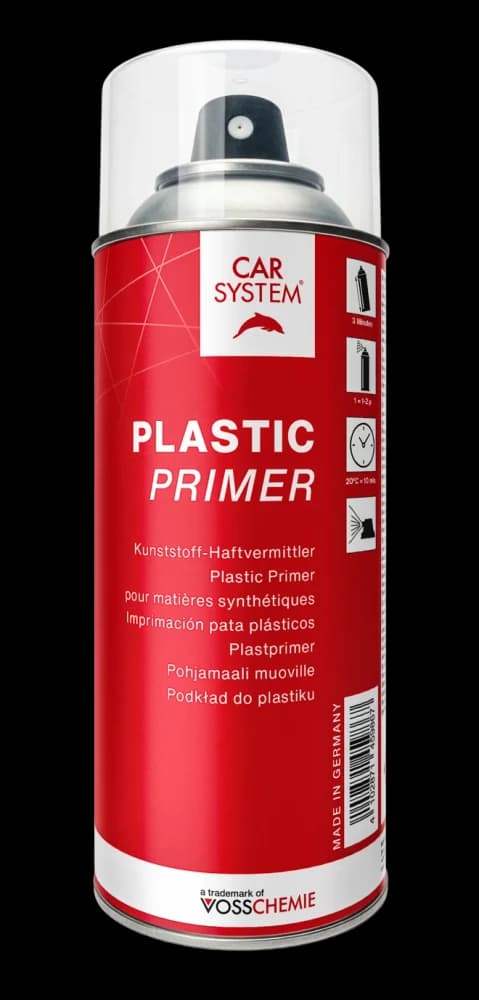
Reviewed on
Identify the part before choosing a product
Look for the material marking and check whether you are working on bare plastic, a factory-primed part or an existing coating. Note the planned repair as well. Appearance or the vehicle name alone is not enough to determine the preparation the surface needs.
If you cannot identify the substrate, gather the part information before choosing. Sending a photo of the marking and describing the surface condition makes the enquiry more useful. Avoid ordering a primer simply because it was used on another part in the workshop.
Carsystem Plastic Primer: check a specific reference
The SIC catalogue includes transparent Plastic Primer in a 400 ml aerosol, reference 145986. It is an adhesion promoter for compatible plastics. Carsystem's V03 technical data sheet includes PP, PP/EPDM and ABS, and excludes PE and PC. Check the full list and manufacturer conditions for your part.
The card below links to that reference and its current terms. For replenishment, specify how many aerosols you need. If you want a different product or format, ask explicitly: this page does not treat all plastics or repair systems as interchangeable.
Related catalogue references
AT SIC REFINISH
Carsystem Plastic Primer adhesion promoter · 400 ml
1 transparent 400 ml aerosol
€19.30
VAT included
Preparation and refinishing: review the complete system
Your choice must account for both the substrate and the products to be applied afterwards. Identify the cleaner and intended refinishing system, and gather their technical data sheets. Check cleaning and specified flash-off times before continuing; extra coats do not resolve incompatibility.
Prepare the workstation using the instructions and safety information for the specific product. When asking about an application problem, record what was used, in which order and under what conditions. This allows a more precise process review than simply saying the paint will not stick.
Buying primer for a bodyshop
Keep the aerosol reference and contents on your replenishment list. Check available containers and workshop consumption before finalising quantities. The amount required depends on the job; an order's coverage cannot be calculated from the number of bumpers alone.
When comparing quotes, separate primer, cleaning products and finishes. Specify delivery or collection and the planned use date. SIC Refinish will review the enquiry using the details supplied, without treating products, compatibility or lead times as confirmed unless they appear in the quote.
What to send when checking a primer
- Photograph the plastic marking or provide the part's technical identification.
- Explain whether the surface is bare, primed, painted or repaired, and which finish you plan to apply.
- Specify the paint system and references you currently use. Keep the relevant technical data sheets.
- Add the reference, pack size and quantity for the quote. Check compatibility and terms before confirming the order.
Details that affect the choice
| Detail | Required check |
|---|---|
| Material | Plastic identification, not just the vehicle model |
| Surface | Bare plastic, factory primer or existing paint |
| Product | Exact reference and current technical data sheet |
| Refinishing | Compatibility with products used in subsequent stages |
| Order | Container size, quantities and confirmed terms |
Before requesting material
- Substrate identification and part condition.
- Primer reference and refinishing system.
- Number of aerosols, keeping individual units separate from boxes.
- Application and safety documentation available in the workshop.
Manufacturer documentation consulted: Carsystem Plastic Primer: technical data sheet V03, June 2022.